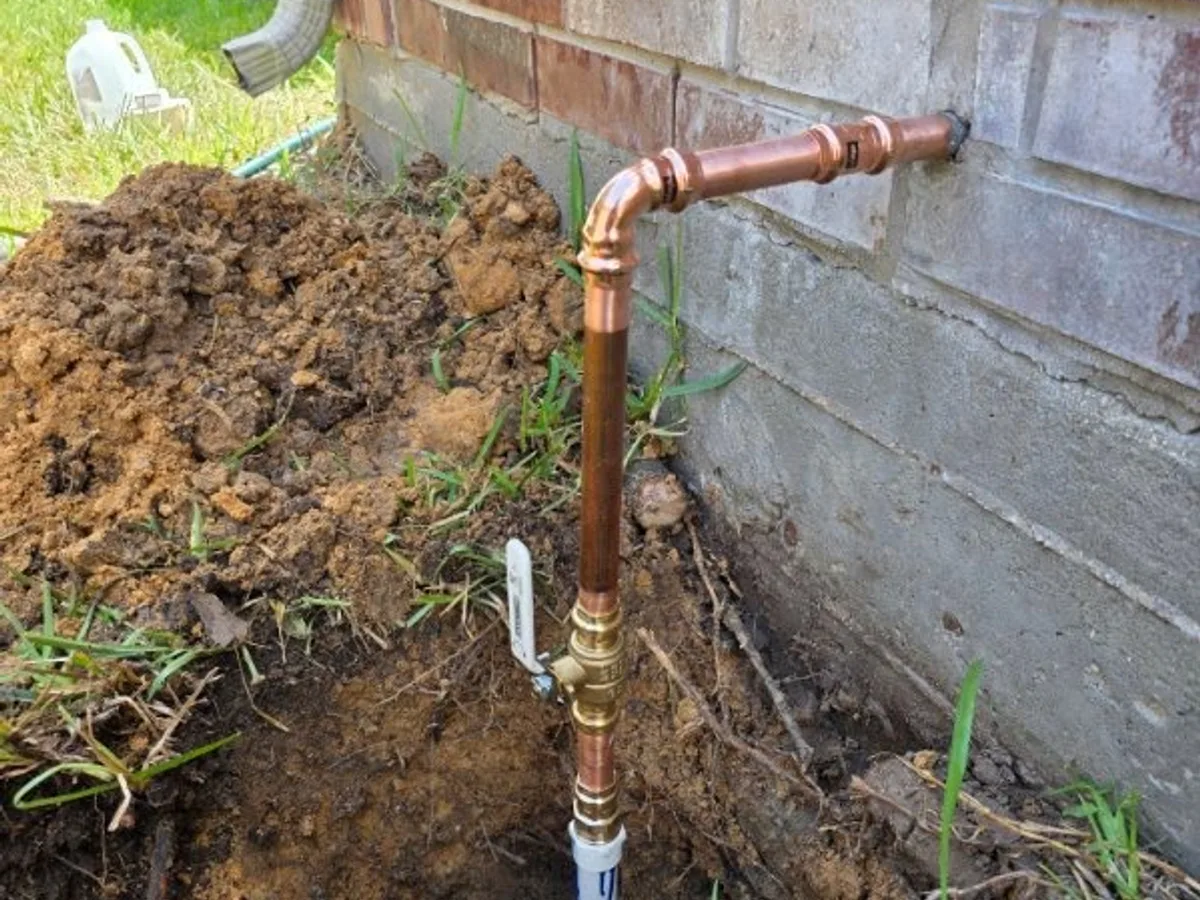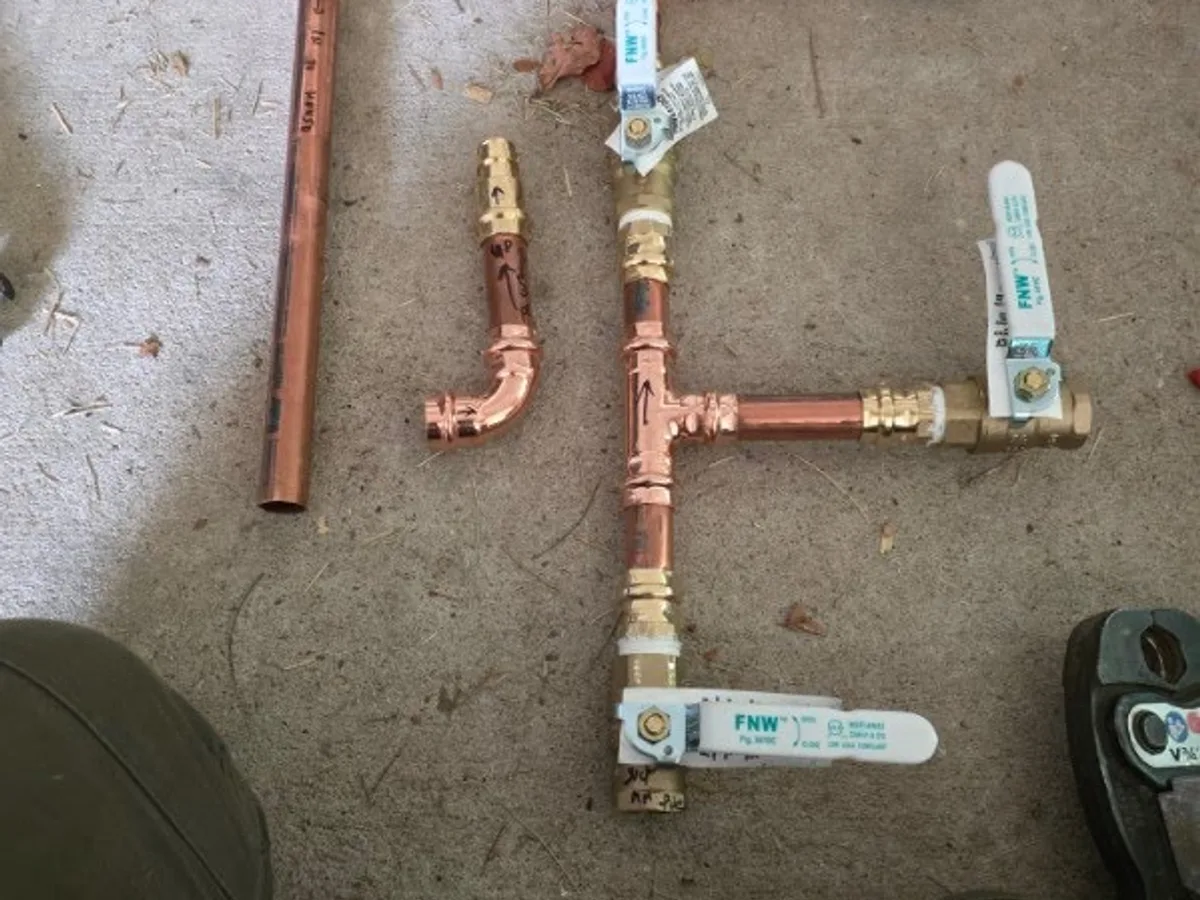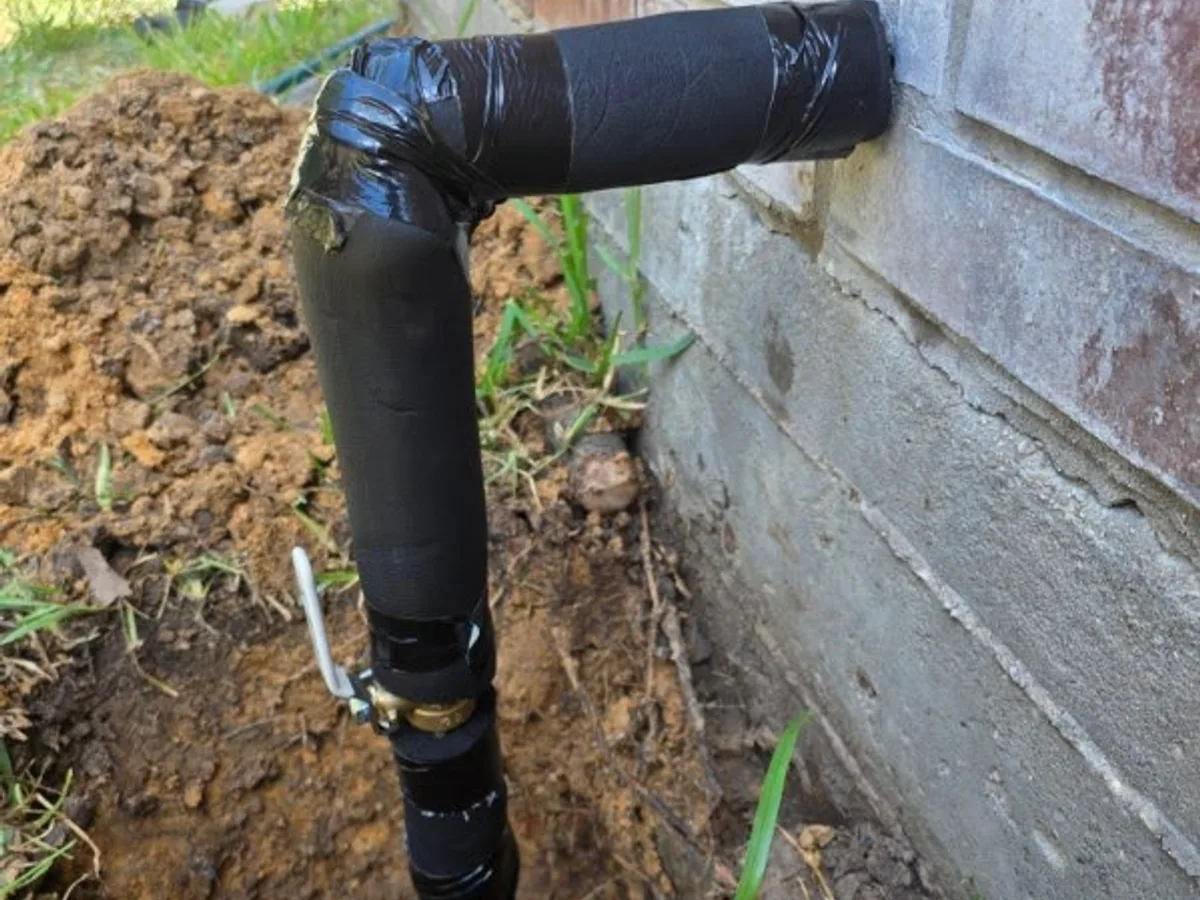

Repiping replaces the water supply system in a house rather than patching it one failure at a time. Texas Plumber Connection repipes homes across Porter, Spring, Conroe, The Woodlands and the surrounding area using Uponor PEX, and most jobs take two to four days depending on the size and layout of the house.
It isn't a small decision, and we're not interested in selling one to someone who doesn't need it. But there's a point where individual repairs stop being the cheaper option, and quite a few houses around here have reached it.
When repiping is the right call
- A second slab leak within a couple of years. The first can be bad luck; the second is usually the system.
- Polybutylene. Grey or blue plastic pipe with crimped fittings, common in homes built from the late 1970s to the mid-1990s. It becomes brittle over time and fails without much warning.
- Galvanized steel. Anything from the 1960s or earlier. It corrodes and scales from the inside until the bore is a fraction of what it should be, which is why pressure drops and hot water runs rusty.
- Repeated pinhole leaks in copper. One is a repair. Three in different rooms means the copper has reached the end of its service life on this water.
- Pressure that's poor everywhere, not at one fixture.
If you have none of those, you probably don't need a repipe, and we'll say so.
Why Uponor PEX
PEX is flexible, which matters enormously in a region where the ground under the slab moves seasonally — it tolerates that movement instead of transmitting it to a rigid joint. It doesn't corrode, it isn't vulnerable to the pinhole failures that finish copper on hard water, it resists freeze damage better than rigid pipe, and it can be run in long continuous lengths with far fewer fittings, which means far fewer places to leak.
Uponor's expansion-fitting system is why we use theirs specifically: the connection is made by expanding the tubing over the fitting and letting it shrink back, which produces a joint that isn't relying on a crimp ring holding its tension for thirty years.
Rerouting overhead
On slab-on-grade homes, which is essentially every house here, a repipe normally means abandoning the lines under the concrete and running the new system overhead through the attic and down inside the walls. That sounds more invasive than it is, and it's the right approach: it takes the supply system out from under the slab entirely, so soil movement stops being a factor and any future leak is visible and reachable instead of buried under four inches of concrete.
What the job actually looks like
- Walk the house — fixture count, layout, attic access, water heater location, current material and where it's failing.
- Plan the routes and give you a fixed price covering pipe, fittings, drywall access points, permitting and inspection.
- Run the new system overhead, one section at a time, keeping water on to as much of the house as possible while we work.
- Tie in fixtures and the water heater, pressure test the system, and have it inspected.
- Patch the access points in the drywall and leave the house clean.
Permitting goes through Montgomery County for unincorporated areas like Porter and New Caney, and through the city in Conroe, Humble, Tomball and Oak Ridge North. We handle it either way — a repipe should be inspected, and an uninspected one is a problem when you sell.
The disruption question
Most families stay in the house. There are stretches without water while sections are tied in, and there will be neat cut-outs in some walls and ceilings that get patched at the end. Two to four days is typical for a single-family home. We'll tell you before we start which days will be the awkward ones.
Serving Porter, TX and nearby
Porter, New Caney, Spring, The Woodlands, Conroe, Oak Ridge North, Cut and Shoot, Humble, Atascocita and Tomball. Estimates run Monday through Saturday, 8am to 8pm, and financing is available through Synchrony — a repipe is exactly the kind of job it's designed for.
No service fee to come and assess it. Call (832) 885-9820.